
Understanding Separation in British Columbia: What It Means and How It Works
Separation can be a confusing and emotional process, especially when legal terms and procedures come into play. In British Columbia, many people assume that separation requires formal steps like court filings or official agreements. The truth is quite different. BC law does not recognize a formal process called “legal separation.” Instead, separation is a status that arises from the actions and intentions of the spouses themselves.

What Separation Means in British Columbia
In BC, separation is not a legal event triggered by paperwork or court orders. There is no official document or filing that declares a couple separated. Instead, separation happens when at least one spouse decides the relationship is over and acts in a way that shows this intention.
This means:
You do not need to file for divorce to be considered separated.
You do not have to start a court case.
You do not have to sign a separation agreement.
You do not need a court order to be separated.
Separation is a status based on facts. It depends on what one spouse intends, communicates, and does. This approach is supported by public guidance from Legal Aid BC and the Province of BC, which clearly state that “legal separation” is not a formal legal status in the province.

How Separation Happens Without Moving Out
Many people think separation means physically moving out of the family home. While this often happens, it is not required. Spouses can be separated even if they continue to live under the same roof. The key is that they have stopped living together as spouses.
For example, a couple may share a home but live separate lives: sleeping in different rooms, managing separate finances, and no longer acting as a married or marriage-like couple. This can be enough to show separation.
The Legal Test for Separation in BC
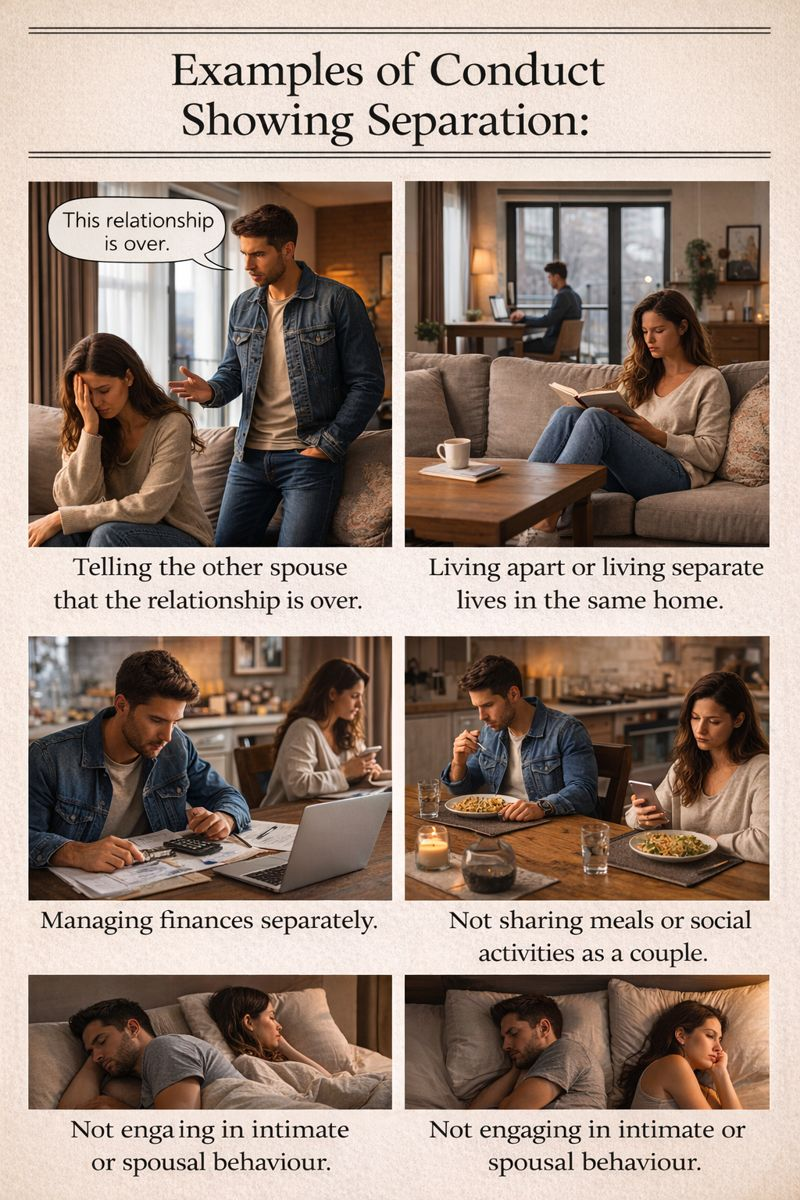
The Family Law Act in BC sets out how to determine if a couple is separated. The test focuses on two main points:
Intention to Separate
Did at least one spouse decide the relationship is over? This means forming a clear intention to end the marriage or marriage-like relationship.
Communication and Conduct
Was this intention communicated to the other spouse? Was it followed by actions that show the relationship has ended?
The law looks at the whole situation, including words, behaviour, and living arrangements. It does not require both spouses to agree. One spouse’s clear intention and conduct can be enough to establish separation.
Practical Tips for Couples Considering Separation
Communicate Clearly
If you decide to separate, clearly communicate your intention to your spouse. This can be done verbally or in writing.
Document Your Actions
Keep records of changes in living arrangements, finances, and communication. This can help prove separation if needed later.
Consider Legal Advice
Even though separation does not require court filings, legal advice can help you understand your rights and plan next steps.
Understand Your Living Situation
Living apart is common but not required. If you remain in the same home, make sure your behaviour reflects separation.
Plan for Children
Separation affects parenting arrangements. Discuss and document plans for custody and support.
Why Understanding Separation Matters
Separation affects many legal rights and responsibilities, including:
Division of property and debts.
Child custody and support arrangements.
Spousal support claims.
Eligibility to file for divorce (which requires at least one year of separation).
Knowing that separation is based on intention and conduct helps couples understand when their legal status changes, even if they have not taken formal steps.
Resources:
Disclaimer: The information provided is for general informational purposes only and does not constitute legal advice. If you require legal assistance, please consult a qualified lawyer.
Posted by: Paula Camila Monoga
Family Law Advocacy


Comments